
Educational breathwork content you can explore at home — morning patterns, evening rhythms, and an interactive timing tool. Published by Vibeglowau.ddd, Invercargill, New Zealand. For adults seeking general lifestyle information only.
Free informational emails only. No fees. No products for sale. Unsubscribe anytime. Not medical advice.
Simple, repeatable patterns that fit into real life — not hour-long rituals.
Breathing practice guides are structured instructions for how to breathe with intention during short sessions — typically two to five minutes. Rather than treating breathwork as something separate from your day, these guides show you how to weave rhythmic patterns into transitions: waking up, preparing for a meeting, winding down after dinner, or settling before sleep.
Each guide on this site focuses on a specific purpose. Some patterns gently raise alertness through slightly faster cycles and fuller inhales. Others extend the exhale to encourage a calmer physiological state. Still others aim for steady, even rhythms that many people find useful when concentrating on detailed work.
Some published reviews in exercise physiology and psychophysiology discuss how controlled breathing may relate to heart-rate variability and subjective calm — but findings vary between studies and individuals. This site shares general educational information only. It does not promise specific outcomes, and nothing here replaces advice from a qualified health professional.
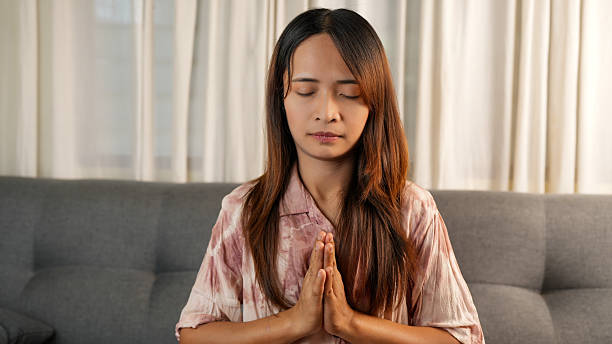
Breathe along with the animation — choose a pattern and follow the circle for two to three minutes.
Ready
—
Select a mode and press Start to begin.
When you follow a visual cue — a circle expanding on inhale and contracting on exhale — your attention has a clear anchor. That active engagement may help you stay with the practice for two to three minutes instead of drifting after thirty seconds. Many people find this more reliable than counting silently, especially when learning a new pattern.
The three modes above describe commonly discussed patterns. 4-7-8 extends the exhale relative to the inhale, which some people use as part of an evening wind-down routine. Box breathing uses equal counts for inhale, hold, exhale, and hold — often discussed in focus and composure contexts. Coherent breathing pairs equal-length inhales and exhales at around five breaths per minute, a rhythm examined in some published breathing research.
Sit upright with shoulders relaxed. Breathe through your nose if comfortable, or through pursed lips on the exhale. Stop if you feel dizzy or uncomfortable, and return to normal breathing.
Tip: Try one full cycle of each mode before choosing your favourite. Notice which pattern feels most natural for your current energy level — there is no single "best" technique for everyone.
How gradual CO₂ tolerance concepts are discussed in sports physiology literature.

Hypercapnic training — sometimes called CO₂ tolerance training — involves brief, controlled exposure to slightly elevated carbon dioxide levels through breath-holding or reduced breathing volume. The idea is not to deprive yourself of oxygen, but to teach your body to tolerate normal CO₂ levels without triggering an urgent urge to breathe.
When CO₂ builds up in the blood, haemoglobin may release oxygen more readily to tissues — a phenomenon described by the Bohr effect in physiology textbooks. Some authors discuss how low CO₂ tolerance and over-breathing may be connected in certain contexts. Any practice should be approached cautiously and is described here for education only.
Common introductory methods include short breath holds after a normal exhale, walking while holding the breath for a few paces, or reducing breathing volume for one to two minutes while remaining comfortable. Sessions are typically brief and should never feel distressing. This is general lifestyle information — not a treatment protocol.
Read the Full CO₂ GuideBreath patterns that gently raise alertness when you feel sluggish.
Up-regulating breathwork uses faster rhythms, emphasised inhales, and sometimes brief retentions to shift your nervous system toward a more alert state. Unlike a cup of coffee, which can spike and crash, breath-based awakening tends to be subtler — but many people find it useful as a morning ritual or mid-afternoon reset.
A simple starting pattern: sit tall, take three quick nasal inhales followed by one long exhale through the mouth. Repeat for thirty to sixty seconds, then return to normal breathing. Another option is the "breath of fire" style — rapid, equal inhales and exhales through the nose for twenty to thirty seconds — though this is more stimulating and not suitable for everyone.
Research on rapid breathing styles suggests possible links to alertness in some small studies, but evidence is mixed and individual tolerance varies widely. Avoid stimulating patterns if you are pregnant, have cardiovascular concerns, or feel unwell. Always start with shorter sessions and observe how your body responds.
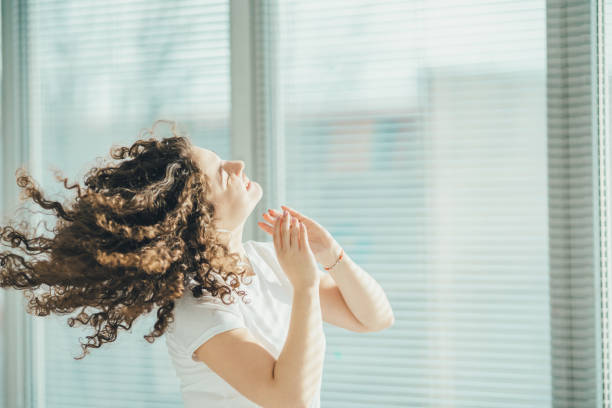
Rhythms that lengthen the out-breath — often used for evening wind-down routines.
When you feel tense, your breathing often becomes shallow and fast — dominated by the inhale. Down-regulating techniques deliberately reverse this ratio: the exhale becomes longer than the inhale, sometimes with a brief pause at the bottom of the breath. This pattern activates the parasympathetic branch of the autonomic nervous system, which is associated with rest-and-digest activity.
A prolonged exhale is discussed in some physiology literature in connection with the vagus nerve and heart-rate changes. Published studies on slow breathing have reported varied subjective and physiological responses — though results depend on the individual, study design, and context. We share this for general education, not as a clinical recommendation.
The classic 4-7-8 pattern (inhale four counts, hold seven, exhale eight) is one example. Another is simply doubling the length of your exhale compared to your inhale — for instance, inhale for three counts and exhale for six. Practice for three to five minutes in a quiet space. If the extended hold feels uncomfortable, skip it and focus only on lengthening the exhale.
Many people find that slowing the exhale helps them feel more settled during a busy day — a simple rhythm worth trying for a few minutes at a time.
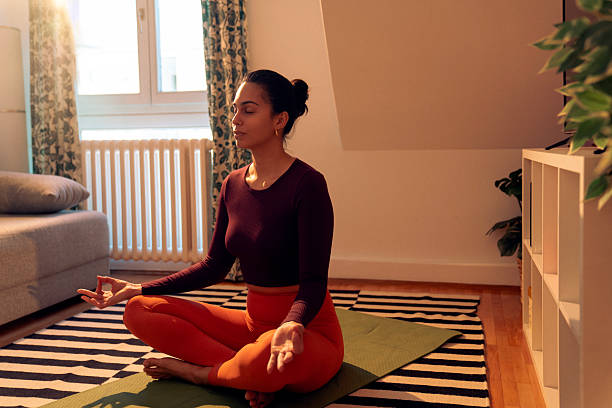
Even, steady patterns that support sustained concentration.

Balancing breathwork aims for symmetry: equal-length inhales and exhales, often without breath holds. Coherent breathing at roughly five to six breaths per minute is the most studied example. At this pace, heart rate and breathing can fall into a rhythmic synchrony that some researchers call respiratory sinus arrhythmia coherence.
For desk work, try inhaling for five counts and exhaling for five counts through the nose. Maintain this for three to five minutes before starting a complex task, or use it as a brief reset between meetings. Box breathing (four counts each phase) is another balancing option with a slightly more structured feel.
Some people who practise rhythmic breathing regularly say it helps them stay with a task — though this is subjective and varies. Many find it helpful to practise at the same time and place each day, so the rhythm becomes familiar. You might pair it with a daily trigger, such as opening your laptop or sitting down for a creative session.
Focus Breathing GuideRead before starting any breathing practice on this site.
Stop immediately if you feel dizzy, unwell, or uncomfortable. Return to normal breathing and rest. Breath-holding and reduced-breathing exercises may not be suitable during pregnancy or for people with certain health conditions. When in doubt, speak with a registered health professional before trying new techniques.
Practise while seated or lying down — never while driving, swimming, or operating machinery. Hypercapnic exercises involving breath holds should be done on dry land in a comfortable position. Avoid practising immediately after a large meal. Keep sessions short when you are new: two to three minutes is enough to start.
All content on Vibeglowau.ddd is free educational material about lifestyle breathing practices. We do not diagnose conditions, prescribe treatments, or claim that any technique will produce specific health results. Individual experiences differ. This site is not a substitute for professional medical, psychological, or therapeutic advice.
Upcoming informal breathwork meetups and online information sessions in Southland.
Queens Park, Invercargill — a gentle 30-minute group walk with guided five-count breathing. Free, no registration required. General lifestyle session, not a clinical programme.
Free online information session via email link. Learn the four-phase pattern for work breaks. Duration: 45 minutes including Q&A. General lifestyle content only — not a clinical programme.
Community hall, Glengarry — free informational session on extended-exhale rhythms for evening wind-down. Bring a yoga mat or cushion. General lifestyle event — not a therapy or medical programme.
Who we are and what this website offers.
Vibeglowau.ddd is an independent educational website operated from Invercargill, Southland, New Zealand. We publish free, original articles and guides about breathing practices for everyday life — written for adults who want general lifestyle information, not clinical care.
Our content is researched from publicly available physiology and lifestyle sources, then written in plain language for home use. We do not employ medical practitioners to review individual readers, and we do not provide diagnoses, prescriptions, or personalised health plans.
What we offer: free reading material, an on-page breathing timer, optional email updates about new guides, and information about local community sessions. What we do not offer: paid programmes, supplements, medical products, telehealth, or guaranteed outcomes of any kind.
Legal compliance (New Zealand): We handle personal information under the Privacy Act 2020. Email communications comply with the Unsolicited Electronic Messages Act 2007. Our content practices align with the Fair Trading Act 1986 — we do not make misleading claims about health outcomes. See our Privacy Policy, Cookie Policy, and Terms of Use.
Common questions about breathing practices and this website.
Most guides on this site recommend two to five minutes per session. You can practise once or twice daily — for example, an energising pattern in the morning and a calming pattern in the evening. Consistency over weeks tends to matter more than session length. Start small and build gradually.
Yes, down-regulating and coherent breathing work well lying down, especially before sleep. Avoid energising or breath-hold techniques in bed, as they may increase alertness. If you feel drowsy during a session, that is generally fine for evening practices.
Nasal breathing is preferred for most patterns because it filters and warms the air and naturally slows the breath. However, if nasal congestion makes it uncomfortable, pursed-lip exhalation through the mouth is an acceptable alternative for down-regulating techniques. Do what allows you to breathe comfortably.
Box breathing uses four equal phases — inhale, hold, exhale, hold — each at the same count (typically four seconds). Coherent breathing uses only two phases — inhale and exhale — at equal length, usually around five seconds each, without holds. Box breathing feels more structured; coherent breathing feels more flowing.
No. All guides, the interactive breathing tool, and event information are free. We do not sell products or paid programmes. If you subscribe to our email list, you receive general lifestyle content only and can unsubscribe at any time.
No. All content is general lifestyle and educational information only. We are not a medical provider, clinic, or pharmacy. Nothing on this site diagnoses, treats, or prevents any condition. Always consult a registered health professional for personal medical questions.
No. We do not sell supplements, medical devices, paid courses, apps, or personalised coaching. The website, guides, and interactive breathing timer are free to use. Email updates are optional and free to unsubscribe from.